


Dr. Yaara Erez and Dr. Hanna Keren Awarded Grant for Developing Brain-Computer Interface for Emotional Monitoring and Intervention
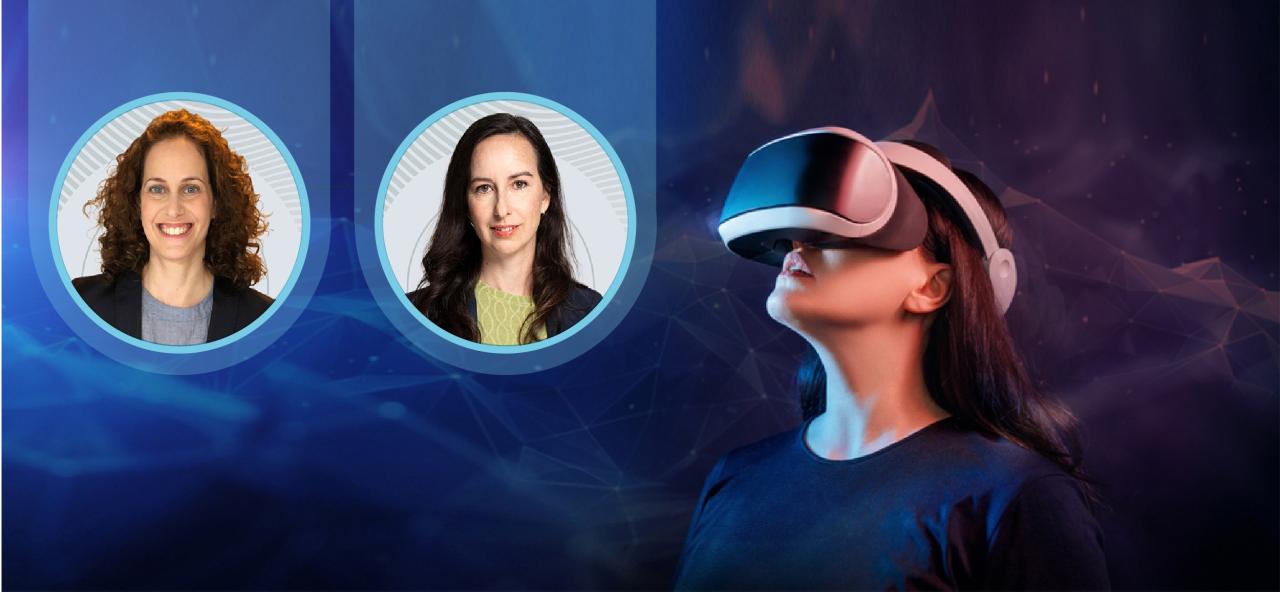
The technology developed by the two researchers is based on physiological parameters in a VR setting, and will provide real-time mental state assessment. The collaborative project has earned them a competitive grant from the Ministry of Innovation, Science, and Technology in the field of health and medicine
One of the key problems in mental healthcare is a lack of objective tools for continuous assessment of mood and wellbeing. “Mood assessment today mostly relies on subjective questionnaires with low time resolution, which tend to depict the state of the patient only over recent weeks,” explains Dr. Hanna Keren of Bar-Ilan’s Faculty of Medicine in the Galilee. “This limits our ability to monitor rapid dynamic changes or provide real-time intervention, resulting in impeded quality of care for patients.”
This is the problem that Dr. Keren and Dr. Erez of Bar-Ilan’s Faculty of Engineering set out to solve, in a project that focuses on personalized mood monitoring through neural and physiological signals. The innovative project was awarded a grant from the Ministry of Innovation, Science, and Technology, as part of a 2025 call for proposals in the field of health and medicine, and is among those selected from 84 proposals in the sub-field of mental health technologies.
Identifying Mood in a Virtual Reality Environment
At the core of the joint work of Dr. Erez and Dr. Keren is the development of a non-invasive brain-computer interface (BCI) for emotional monitoring. It will be based on methodologies developed in the laboratories of both researchers and will be integrated into a single technology. First, the technology will use an adaptive system for mood monitoring that modifies itself in a closed loop in real-time according to user responses, using virtual reality (VR), which was developed by Dr. Keren. "During the experiment, users experience a changing virtual environment, designed to influence mood in real-time using control algorithms from the Engineering domain – changes such as light, sounds, and weather conditions," explains Dr. Keren.
In parallel, the proposed technology will simultaneously collect neural and physiological signals from multiple sensors, which will measure brain and physiological parameters such as EEG, heart rate, skin conductance, and eye movements. "There is great potential for assessing mental states through physiological measures. For example, many studies show that when anxiety increases, there is an immediate surge in cortisol levels in the body, which can be easily measured in saliva. We aim to identify such reliable measures for emotional states"
Mood Assessment Within Minutes, Using Machine Learning
The data collected during these sessions will be transferred to a system for real-time analysis of brain and physiological data, developed in Dr. Erez's laboratory. "The data that will be collected will be transferred to a computerized system, based on machine learning, that will be able to provide a mood assessment within a timeframe of minutes," says Dr. Erez. "This innovative system will be able not only to identify mood from the brain and physiological data quickly, but will also enable real-time response and clinical intervention."
Interfaculty Collaboration
Dr. Yaara Erez, from the Faculty of Engineering and the Gonda Multidisciplinary Brain Research Center, specializes in neural information processing, brain networks, machine learning and computational methods for processing brain signals. As part of her research, she decodes brain signals from various imaging methods, and examines the way different areas of the brain are connected to various functions and how they communicate with each other. Based on these insights, she develops innovative tools that will serve to improve diagnosis and treatment in clinical populations within the framework of personalized medicine.
Dr. Hanna Keren, from Bar-Ilan's Faculty of Medicine in the Galilee and the Gonda Multidisciplinary Brain Research Center, studies the integration between neuroscience and engineering, and through mathematical models and innovative personalized experiments, she attempts to decode mechanisms of emotional variability between people, objective measures of emotions, and the disruption of all these in depression.
The Goal: Real-Time Mental Health Monitoring and Treatment
The joint and interdisciplinary work of the two researchers will combine knowledge in computational neuroscience, brain-computer interfaces and advanced signal processing, with the aim of advancing both the scientific understanding of mood dynamics and the technological foundations for personalized treatment in mental health.
The research will lay the groundwork for future applications that will enable real-time assessment of mood shifts in individuals suffering from mood disorders, and provide them with immediate assistance tailored personally to their condition.
Last Updated Date : 15/02/2026