

Dr. Yoli Shavit Wins Prestigious Horizon Europe Grant
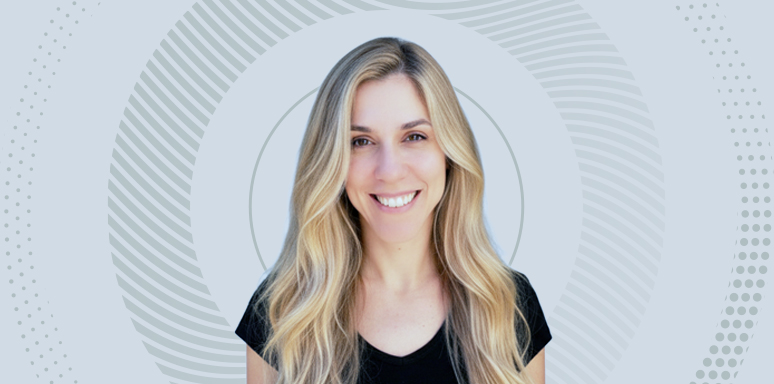
Dr. Yoli Shavit is a member of a consortium that is developing an integrated AI model for materials science that will enable dramatic acceleration in new materials development. She is responsible for the AI architecture intended to link entirely different types of data
Dr. Yoli Shavit, a new faculty member in the Software Engineering track, has won the competitive and highly prestigious Horizon Europe research grant from the European Union, as part of a leading international consortium. The consortium, which received €5.95 million in funding, was selected from a pool of applicants in a highly competitive call from the European Union for developing AI foundation models for science (GenAI4EU). The group will lead the GENMAT project (Generative Foundation Model for Multi-Scale Materials Discovery, Design and Deployment).
Accelerating advanced materials development through artificial intelligence
Developing a new material, from its discovery in the lab to commercial industrial application, takes between 10 and 20 years. The overarching goal of the GENMAT project is to dramatically shorten these timelines by creating an integrated AI model for materials science. The great challenge of GENMAT is to gather extensive information – from the molecular and atomic level, through material structure, to field performance – and bring it all together under a single, unified AI infrastructure grounded in the laws of physics.
"Research and industry are currently engaged in predictive as well as generative tasks," says Dr. Shavit. We don't just want to analyze existing materials; we aspire to devise a model that allows scientists to define a list of desired properties, such as flexibility, heat resistance, or recyclability, and have that model design the optimal molecules and material composition on its own. This is a shift from a long process of trial and error to data-driven design."
Clear and immediate benefit across a range of industries
The project will demonstrate its capabilities through three use cases with significant environmental and industrial impact:
Vitrimers: A revolutionary class of durable polymers with dynamic covalent networks that allow them to be repeatedly reshaped and recycled, offering a sustainable alternative to conventional, single-use plastics.
PFAS-Free Durable Coatings: Development of green materials to replace polluting chemicals currently used in water- and ice-repellent coatings.
Structural Health Monitoring (SHM): AI systems connected to sensors that can detect fractures and damage in advanced composite materials (such as in hydrogen tanks or vehicles) and predict their lifespan in order to prevent disasters.
Once the technology is proven, it will serve as an open infrastructure to be used across a wide range of major industries, from automotive and aerospace, to pharmaceutical companies and the semiconductor industry.
The architecture behind GENMAT: representation learning that bridges between molecular structure and material performance
Dr. Shavit, a researcher in the field of deep learning, leads one of the project's most complex and critical parts: the AI architecture designed to link entirely different types of data: molecular inputs, microscopic images, and signals from physical sensors in real time.
Dr. Shavit's research group at the Deep Learning Lab at Bar-Ilan will develop innovative methods for Representation Learning. "The goal is to make the model understand multi-scale, multi-modal physical and chemical relationships in order to enable reliable prediction and the creation of new materials without the model violating the laws of physics or generating 'hallucinations,'" Dr. Shavit explains.
The consortium that Dr. Shavit has joined includes leading industry companies, headed by global chip and AI giant Nvidia, alongside leading European academic institutions. This collaboration creates an unmediated, unique connection between scientists and experts in materials science and researchers and experts in artificial intelligence.
The collaborating materials scientists are responsible for generating and processing the data, while Dr. Shavit's lab leads the development of the deep learning algorithms. Model evaluation is conducted in a controlled manner on both open-source benchmarks and physical laboratory experiments to test the materials in practice. "This is an extraordinary collaboration expected to redefine the future of innovation and application of AI-driven materials," concludes Dr. Shavit.
An opportunity for groundbreaking research: seeking researchers with AI and Materials Science backgrounds
With the grant in hand, Dr. Shavit's research lab at the Faculty of Engineering is now recruiting outstanding doctoral and postdoctoral candidates who want to take part in this ambitious, groundbreaking project. This interdisciplinary research requires a unique combination of expertise in deep learning, foundation models, and representation learning, alongside a proven background in materials science and engineering.
Want to make an impact on the future of AI and global materials science? Contact Dr. Yoli Shavit directly and schedule a meeting: yoli.shavit@biu.ac.il
Last Updated Date : 28/06/2026