


Introducing the Neural Network that Can Help with Early Detection of Epileptic Seizures
A group of researchers under Prof. Yossi Shor is working on a neural network that operates using pulses, which has been proven significantly more efficient and economical than other neural networks. The research, which won a grant from the Israel Innovation Authority, has diverse applications, among them the detection of epileptic seizures
Over the past 18 months, a group of researchers supervised by Prof. Yossi Shor has been working on a neural network that operates using pulses. The group, which received a grant from the Israel Innovation Authority, developed an innovative spiking neural network that mimics brain activity and achieves significantly better results than classic neural networks and pulse-based networks developed to date.
Spiking Neural Network (SNN): A network based on the human brain
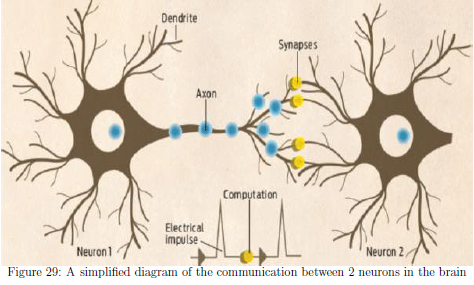
The most efficient and effective computer known to humankind is the human brain. It contains roughly 86 billion neurons that communicate with each other via some 600 trillion synapses. Communication is achieved via electrical pulses (spikes) of varying amplitudes and frequencies, which encode information and transmit it between neurons responsible for computation.
For many years, designs of artificial neural networks (ANNs) have sought to mimic the operation of the human brain to achieve similar performance. Since brain communication is inherently analog, analog implementations have a clear advantage in mimicking the brain. Because this communication has a pulse-like (spiky) nature, researchers believe that implementations that use spikes for communication within an artificial neural network (ANN) may be more efficient. Thus, the spiking neural network (SNN) was born.
SNNs are considered more energy-efficient, running hardware at low power. The research shows that they are inherently efficient for both computation and communication, thanks to event-driven sparsity, activating components only when a specific event occurs.
The advantage of the switch-cap circuits method
In the research led by Prof. Shor, switched capacitors are used to implement a comparator. The circuit uses capacitors and switches to perform high-speed “subtract and compare” operations. During the first clock phase, the switches close to store a reference voltage (or the current input signal) directly on the capacitor. During the second phase, the switches flip, and the capacitor automatically subtracts this stored value from the incoming input signal.
The researchers showed that the network operating this way can save power by three orders of magnitude compared to a classic neural network. Simulations showed the design's power consumption was on par with other studies on pulse-based neural networks and achieved a 100-fold reduction over previously published results. The network was also benchmarked against others using a dataset called MNIST, in which it receives an image's pixel array as input and must output the correct digit.
In addition to Prof. Shor, the lab team includes PhD student Neil Feldman, master’s students Ido Ben Tolila and Alexandra Rukban, and student Tomer Damari, who is due to begin his master’s degree in electrical engineering in the upcoming academic year.
Possible uses of the network: from detecting epileptic seizures to ground vibrations
As part of the research, the lab collaborates with several industry leaders, including Elbit, Tower, Ceva, and Sensomedical, enabling the network to be used across a range of applications.
One project, carried out jointly with Sensomedical, used the network to develop a system for detecting epileptic seizures by feeding EEG signals from various brains into the neural network. In the training phase, the system receives labeled signals, indicating which ones mark an approaching seizure and which do not. In the second phase, it receives signals for examination (inference), with the goal of identifying brain signals that herald an approaching seizure.
Geophone is another project, carried out in collaboration with Elbit. The team is developing a sensor that converts ground vibrations (sound or seismic waves) into an electrical signal, with the aim of distinguishing vibrations caused by vehicles from those caused by pedestrians. Here too, the system was first fed known signals that teach it what a correct identification is, and only then did it receive signals for examination (inference). This application has many uses, including in defense.
At this stage, the network is being developed in the lab using VLSI development tools. It is due to go into production in October 2026 and will include a complete 100×60×60 network capable of supporting all the applications described above. According to the researchers, this project is particularly challenging because it requires extensive knowledge across many disciplines, from theoretical development in Python and SpikingJelly to the development of a component that combines complex analog and digital circuits. This is the first step in this direction, and the project has great potential for further research in the field.
Last Updated Date : 22/07/2026