

Dr. Orr Levy wants to change the way we diagnose and treat diseases
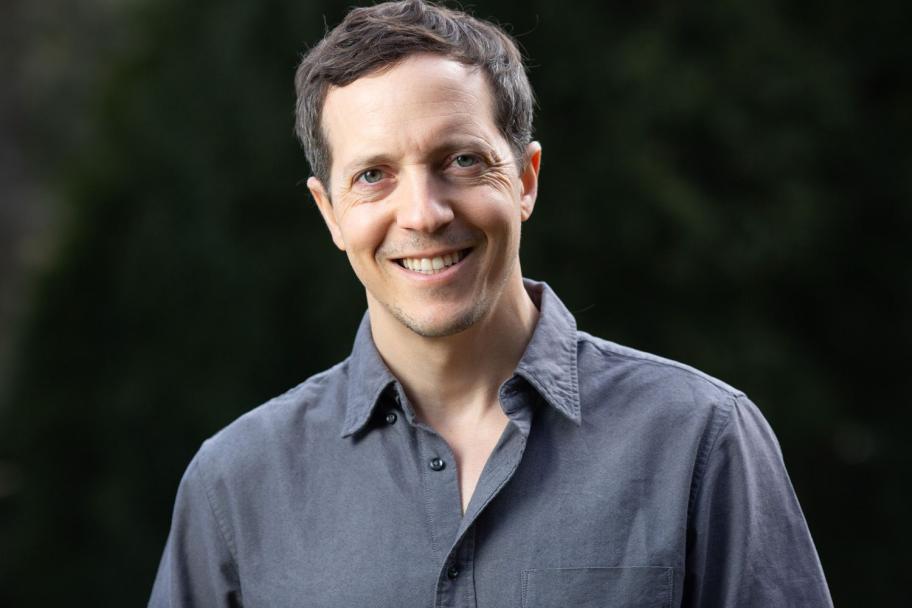
After serving in a range of engineering command roles in the Air Force, Dr. Levy chose academia, joined the Bioengineering track at the Faculty of Engineering, and established the Biological Network Systems Lab, where he combines computational methods development with biological experiments
In December 2014, Orr Levy was 28, and he knew exactly where he was headed: he had completed his master’s degree in biomedical engineering at the Technion, was about to be discharged from the Air Force where he had served in a variety of engineering roles, and had signed a contract for a new industry job. Then his father was diagnosed with lung cancer. “Throughout his illness, I accompanied him to his treatments and went to countless specialists to ensure he would get the best possible care – and as the disease progressed, uncertainty grew, and so did the variety of treatments the doctors recommended,” he recalls. “It stunned me, it frustrated me, and it made me realize how complex this field is, and how little we truly understand about the right way to deal with cancer. I wanted to understand why this uncertainty exists, and how to minimize it.”
On the importance of optimism in science
Now at a crossroads, he chose to follow his heart: he gave up the applied technology path, canceled his contract, extended his military service, and joined a prestigious doctoral program: part-time studies while in service, followed by a year and a half of full commitment to academia. He completed his PhD under Prof. Shlomo Havlin in Bar-Ilan’s Department of Physics. “I chose to study physics, not biology, because I came from an engineering background, and diving headfirst into extensive biological research felt like too big a leap. At the time, I realized that much of the innovation in the study of complex diseases and drug development comes from physicists,” he explains. “I had met Prof. Havlin before that, and we had a wonderful connection. He is a physicist who studies complex systems and tries to understand the laws that govern them, and he is very open to working at the intersection of physics and biology. When I was looking for an advisor, he showed me a study on physiological networks during sleep, in which he found that the information embedded in the network between different organs, such as the brain, heart, and lungs, can teach us a great deal about a person's physiological state. I realized that with his help I could get closer to understanding how complex systems are studied, because cancer is a highly intricate disease that operates on several levels at once – from the genes, through cells and tissues, to the entire body. The bonus was working with one of the best-known physicists in Israel, and one of the most cited in Israel and worldwide."
During his PhD, Dr. Levy worked on network theory. “Network theory has developed significantly in the late 20th century. It tries to explain the behavior of complex systems such as transportation networks, social networks, or even biological networks. I studied different types of networks, including biological ones, with the goal of drawing conclusions about the system itself from the network's properties,” he explains. “I was fortunate to learn many other things from Prof. Havlin. I accompanied him on trips abroad and saw up close how research is done, how to forge good collaborations, and how to supervise students. One of the most important things I learned from him is how to stay optimistic. He encourages and pushes his students, and gives them hope and confidence that they can succeed. Just as he believed in me, and as I later saw him believe in others – that is who I want to be, as a researcher and as a mentor. Optimism in science is very important.”
Academia or the military?
After completing his PhD at 34, Dr. Levy returned to the Air Force. In his first role, he managed a software development group in Ofek Unit 324. He was later promoted to Lieutenant Colonel and headed a key engineering branch. “It was immensely satisfying, but after four years I realized it was time to decide what I want to be when I grow up,” he says. He took a break from service and began a postdoc at Yale University, under Prof. Ruslan Medzhitov, one of the world’s leading immunobiologists. “Research always intrigued me, but I didn’t know whether it was for me, mainly because I had spent most of my adult life in the military. I was torn over whether I would succeed and whether the academic lifestyle would suit me. I told myself that if I succeeded, maybe I was cut out for science. In Prof. Medzhitov's lab, I studied regulatory networks – how genes regulate one another to decide what a given cell will do. It’s a kind of mechanism in which genes control one another in a complex network. I really enjoyed working with Prof. Medzhitov – he is an amazing researcher and person who inspires me every time we meet.”
While working at Yale, Dr. Levy learned of a faculty position in the Bioengineering track at Bar-Ilan’s Faculty of Engineering, “and it was exactly what I was looking for. I’m a practical person, and I believe I can contribute more by combining computational work with experimentation. The Faculty of Engineering immediately understood what I wanted to do, and told me: ‘You can do it here.’ This is where I can bring together my theoretical knowledge and my desire to create something with a real-world impact.”
What won him over at the Faculty of Engineering, above all, was the people. “I knew a lot of people at Bar-Ilan, but I didn’t know the Faculty of Engineering, and I clearly remember the magic I felt when I met Prof. Orit Shefi and other faculty members,” he says with a smile. “I was excited that there was a place that allows you to fulfill your dreams, with wet labs and very talented computational people, and that the Faculty was young and vibrant, open to ideas and offering excellent programs. It felt like a place you want to be part of. I didn’t even want to interview anywhere else – as far as I was concerned, this was it.”
Despite the connection he felt, the decision to dedicate himself to academia was not an easy one. “The process of applying for the position at Bar-Ilan took place at the same time as I was competing for positions in the military. It was a difficult dilemma, because I felt I hadn’t realized my full military potential. I think I’ll carry that sense of a missed opportunity with me for the rest of my life. But I’m at peace with my decision, because here I have the opportunity to perhaps change the way we understand aging processes, and the way we diagnose and treat diseases.”
The Biological Network Systems Lab
Dr. Levy, 40, lives in Ra’anana. He is married and a father of three sons. Upon joining the Faculty of Engineering in October 2025, he established the Biological Network Systems Lab, where he is realizing his aspirations by combining new computational method development with biological experiments. The lab stands on three strong pillars – computational, theoretical, and experimental (wet lab) – with the wet-lab arm led by lab manager Dr. Julia Haddad Guez. “I received a start-up grant from Bar-Ilan, infrastructure and a wet lab, and that enabled me to set up a substantial lab. I’m grateful for that, because it doesn’t happen at every university,” he says.
Dr. Levy studies interdisciplinary problems. “When you’re doing your postdoc, the number of projects you want to pursue is far greater than what you can actually take on, and you collect lots of ideas and say – when I set up my own lab, I’ll be able to start working on this. And that’s exactly what happened, and today I study three different areas in my lab.”
The lab’s first, and main, research field is aging. “There is a big gap in our understanding of how random damage that accumulates over our lifetimes converges into the same phenotypes that all old people share. My research focuses on gene regulatory networks, and what happens to them as we age,” he explains. “The lab studies aging as a process of loss of coordination: as damage accumulates over our lifetime, cells that appear healthy may lose coordination in activating their genetic programs. We seek to understand how these changes add up to impaired tissue and organ function, and whether the process can be detected at an early stage, even before symptoms appear. Early detection of these loss-of-coordination signatures, from gene expression to routine blood work, makes it possible to diagnose age-related diseases before symptoms appear and to guide treatment that preserves function and extends healthy years of life.”
The second field is microbiome networks, the bacteria that live in the gut, which also function as a complex network that is largely unknown to us. “We study what happens to this network as we age, and when we are ill, and how it can help us achieve better diagnostics and better treatments.”
The third field is networks in medicine. “We’re trying to uncover the hidden network that links different diseases, and to understand the connection between different diseases and different biological parameters. Today, when you go to the doctor, they look at your blood work and check whether each parameter is within the normal range. But we found that the very relationship between different parameters can indicate an unhealthy state, helping us to predict an emerging disease,” he explains.
Despite their differences, all three fields share the same guiding principle: to understand a biological system, you must examine not only each component individually, but also the connections between them and how changes in those connections affect the system's overall function. In recent years, there has been a growing understanding of just how important these connections are. In the year since its establishment, the lab has already won a highly competitive grant from the Ministry of Health for research on prolonging a healthy lifespan, including the prevention, delay, and treatment of age-related diseases.
The future lies in the computational world
Dr. Levy’s research group currently includes about 15 researchers from Israel and abroad, including two from China, one from Brazil, and one who immigrated from Russia. They come from diverse backgrounds in wet biology, physics, computational biology, and advanced engineering computational methods development and application. There is also a neurologist, regional head of neurology at Clalit Health Services, who joined the lab to pursue a computational PhD. “I think everyone understands that the future lies in the computational world, and that this is where a huge impact can be made,” he says.
The atmosphere and environment are extremely important to Dr. Levy, both at the university and in his own lab. “It was crucial for me to build a large, multidisciplinary lab, because I think the students benefit from it. It was important to me that they work together and enjoy one another, and that’s the atmosphere I try to create in the lab. I also really enjoy being here, at Bar-Ilan, and I want to say how good I feel here as a new faculty member, how well the ecosystem here matches today’s needs, and how much I feel part of an excellent group. I think the best example of this is that students come here from abroad, despite everything that has been happening in Israel over the past three years, and they really enjoy it and even want to bring their friends.”
Last Updated Date : 28/10/2026