


Prof. Amos Danielli Develops a Technology for Detecting Non-Coding RNA Molecules at Low Concentrations
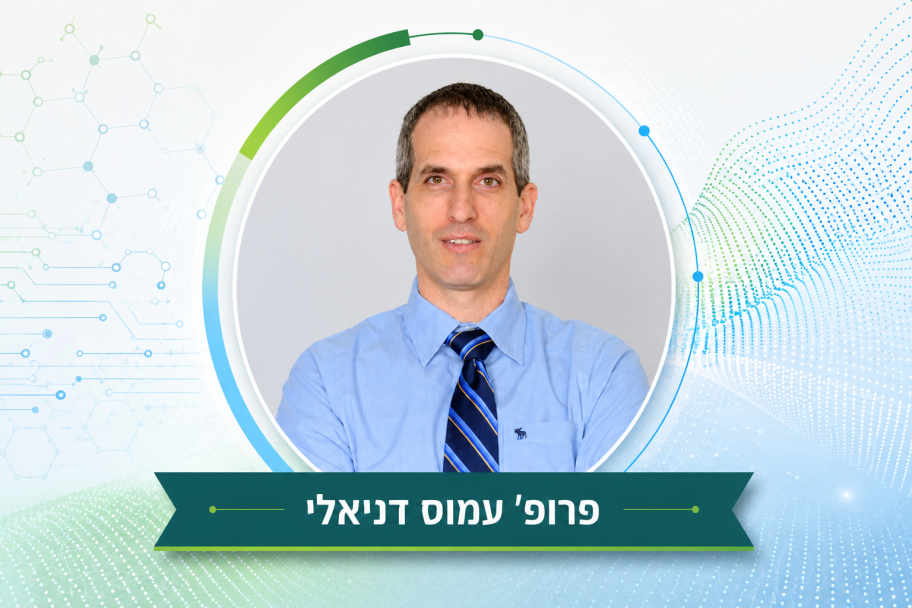
Sensitive detection of non-coding RNA molecules may contribute to the diagnosis and monitoring of many diseases, including cancer. Prof. Danielli's method, which also earned him an equipment grant, combines PCR technologies with an optical technology he developed, enabling fast, accurate, and reliable measurement
While non-coding RNA molecules do not encode proteins, they still play an important role in biological processes and the development of various diseases, including cancer. Their sensitive detection may therefore contribute to early diagnosis and disease monitoring. One of the greatest challenges in diagnostics and biological research is detecting the presence of these molecules in the body at minute levels. Some of these molecules are found in saliva and plasma at concentrations so low that conventional PCR-based methods may struggle to measure them reliably.
Prof. Amos Danielli is developing a method that would allow the detection of non-coding RNA molecules in the body even at minute concentrations. As part of the research, which earned him an ISF grant, Prof. Danielli combines PCR tests with Optical Modulation Biosensing (OMB) technology developed in his lab. “The method concentrates the labeled molecules into a small area using magnetic particles, while simultaneously filtering out optical background noise, thereby making it possible to detect much weaker signals,” he says. “The goal of the research is to understand which factors determine the sensitivity of the method and to develop principles that will, in the future, make it possible to measure a wide range of non-coding RNA molecules in complex samples such as saliva and plasma.”
In addition to the personal grant, Prof. Danielli received a mid-course equipment grant, which will enable him to automate much of the measurement process. Components include a robot for sample preparation and an automated, multi-channel OMB system capable of measuring many samples in 96-well plates. “The robot will automatically perform operations such as pipetting, mixing, and reagent addition, while the OMB system will carry out the optical measurement without requiring manual adjustment of each sample,” he explains.
The grant will also be used towards purchasing complementary equipment for building and operating the system. “Automation is particularly important when working with hundreds of samples at very low concentrations, because even the slightest difference in sample preparation can affect the result. The new system will allow us to conduct research faster, more accurately, and more consistently – and in the future, we will be able to use it in other research in the field of biological diagnostics.”
Last Updated Date : 26/08/2026